Testing, delivery, and install
A build ends in three things: a test you watched, a draft you keep, and — if you ask — a request an admin decides. This page is the second half of Your first custom agent, for when you want to know exactly what each of those means.
The test card
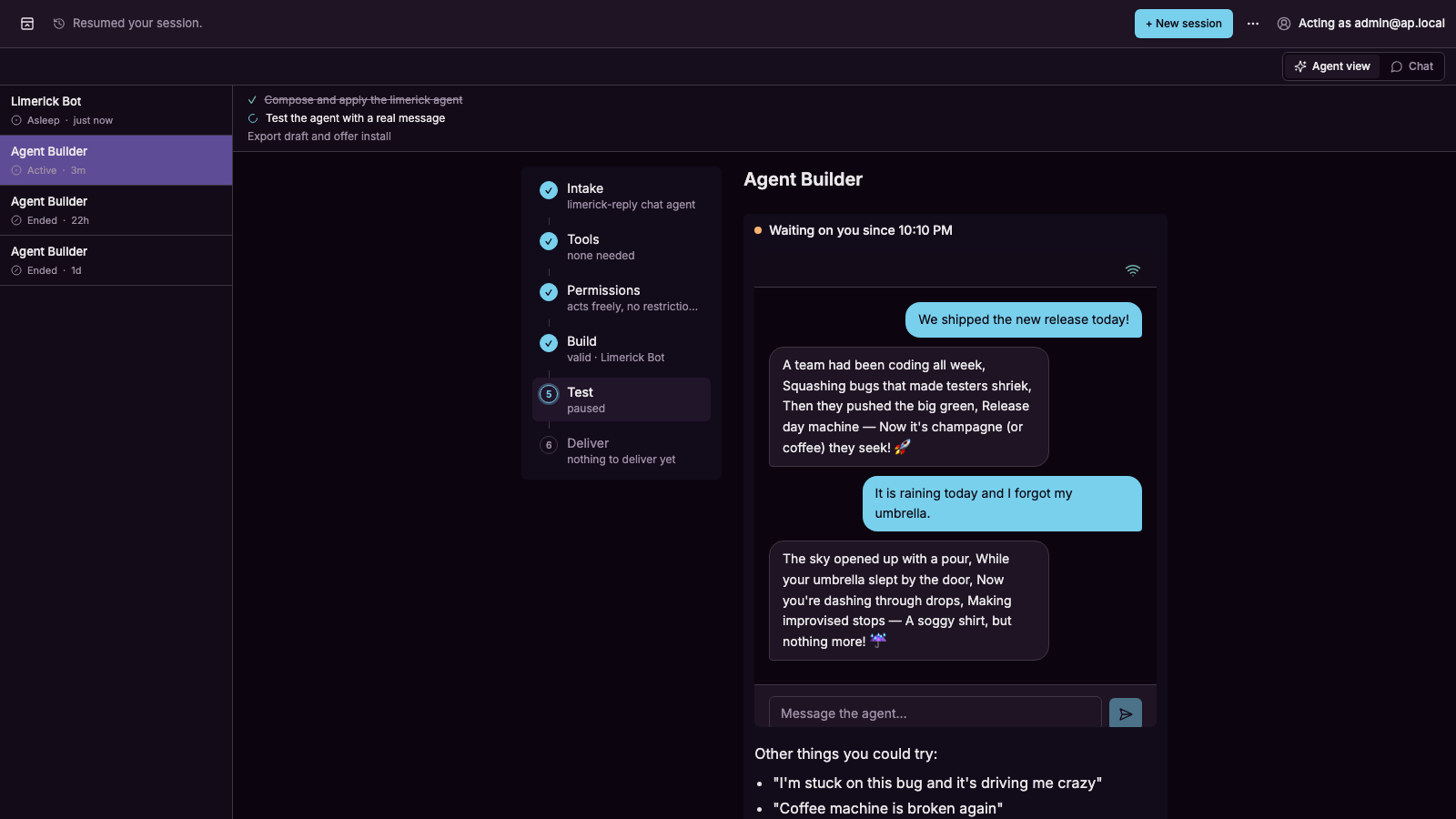
The Test stage runs the new agent as a real session, the same way it would run after install, under the same guards. The card on the page is the builder's own reading of that session:
| The card says | What is true |
|---|---|
| Not started · a start button | No test session yet. The button (Start the test, or the builder's own wording for it) opens one, embedded on the page, with a few example requests to try. |
| Running since time | The test is live and the builder is watching it. Below the chat, when the builder put them up: Done testing, That's not right, Stop the test — each of which you can also just say. |
| Waiting on you since time | The agent under test asked you something and is parked until you answer, in its chat. |
| Still running; I stopped watching at time | The builder's watch timed out but the session is still up. Keep watching picks the same test back up. |
| Ended at time | The session finished or was stopped. The first line says how many messages you sent and which tools it called; Start a fresh test opens a new one. |
Done testing is a report, not a verdict: the builder reads the test's log — what tools were called, with what, and what came back — and tells you what the agent actually did before asking whether that looked right. That's not right starts from what you expected versus what happened and routes the fix to the stage that owns it (a missing tool, a permission that was too tight, a prompt that read the request wrong), then offers another test.
The saved draft
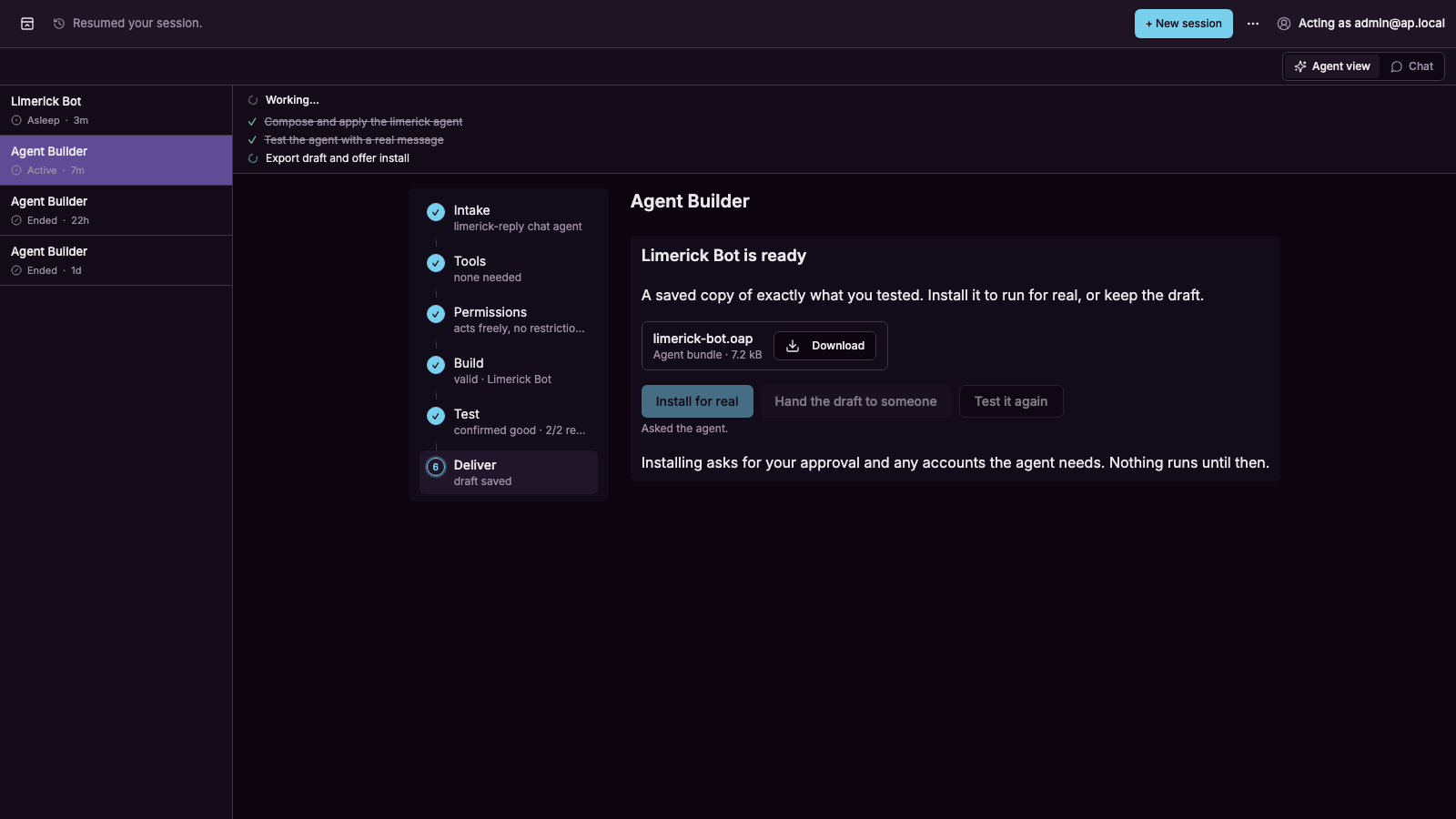
Deliver always exports the draft first, whether or not it is installed. What you get is a .oap bundle —
the same packaging every agent here ships as — attached to the conversation and offered on
the page as a download. It carries the agent's definition, its tools, its skills, and the questions an install
must answer. It carries nothing of your accounts: a bundle declares the credentials it needs and never their
values.
Because it is a complete bundle, it is portable in the ordinary sense. Hand the draft to someone is exactly
that — send them the file; they can install it with oap agent install, or ask an admin to. The workshop it
was built in is not part of the draft and does not need to exist any more.
Install for real
Install for real records a request; it does not install anything. The request carries a suggested name for the agent and the digest of the draft as tested, and it waits for a platform admin. The builder tells you so in plain terms — it is someone else's decision to make — and marks the Deliver stage accordingly.
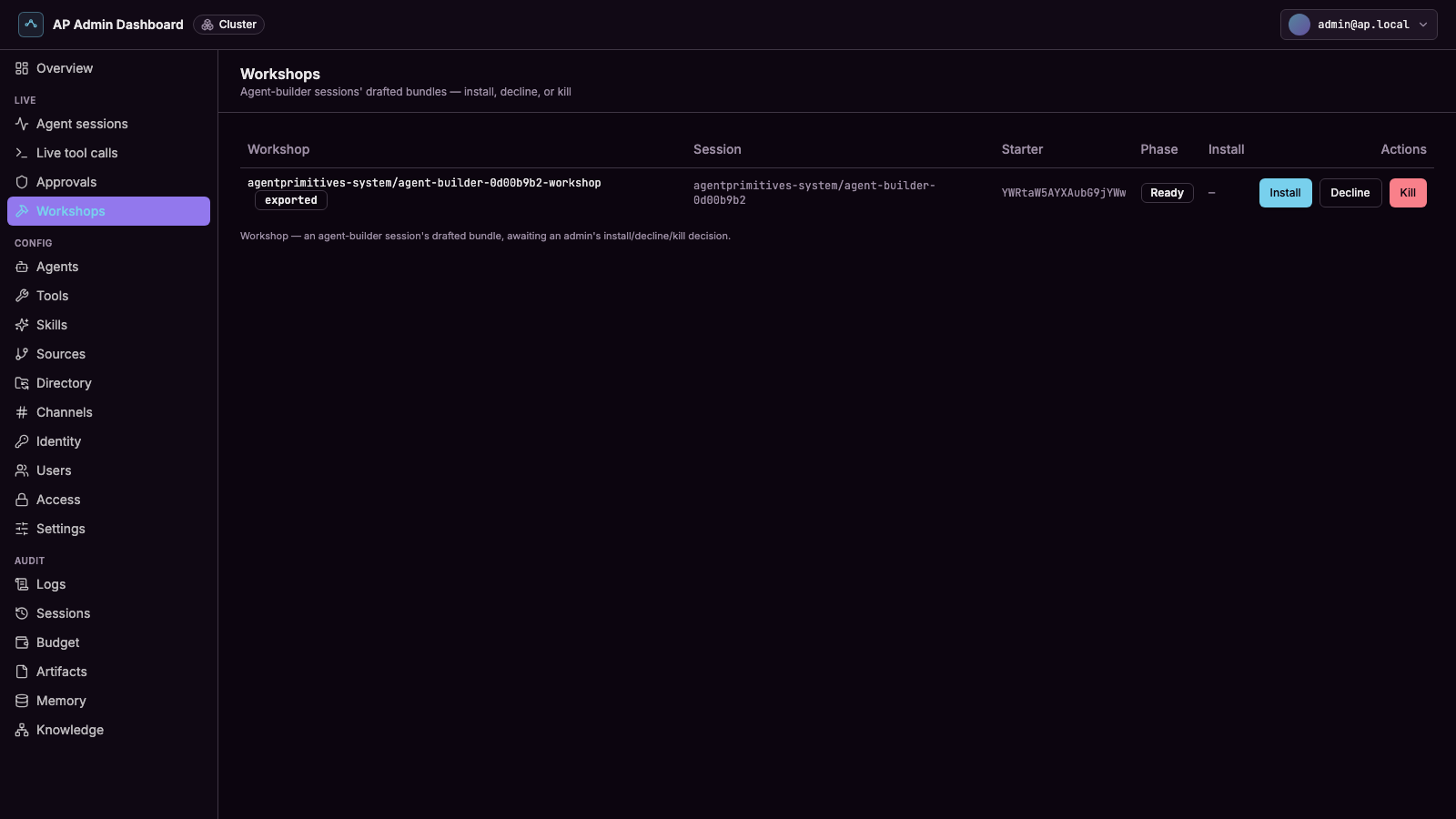
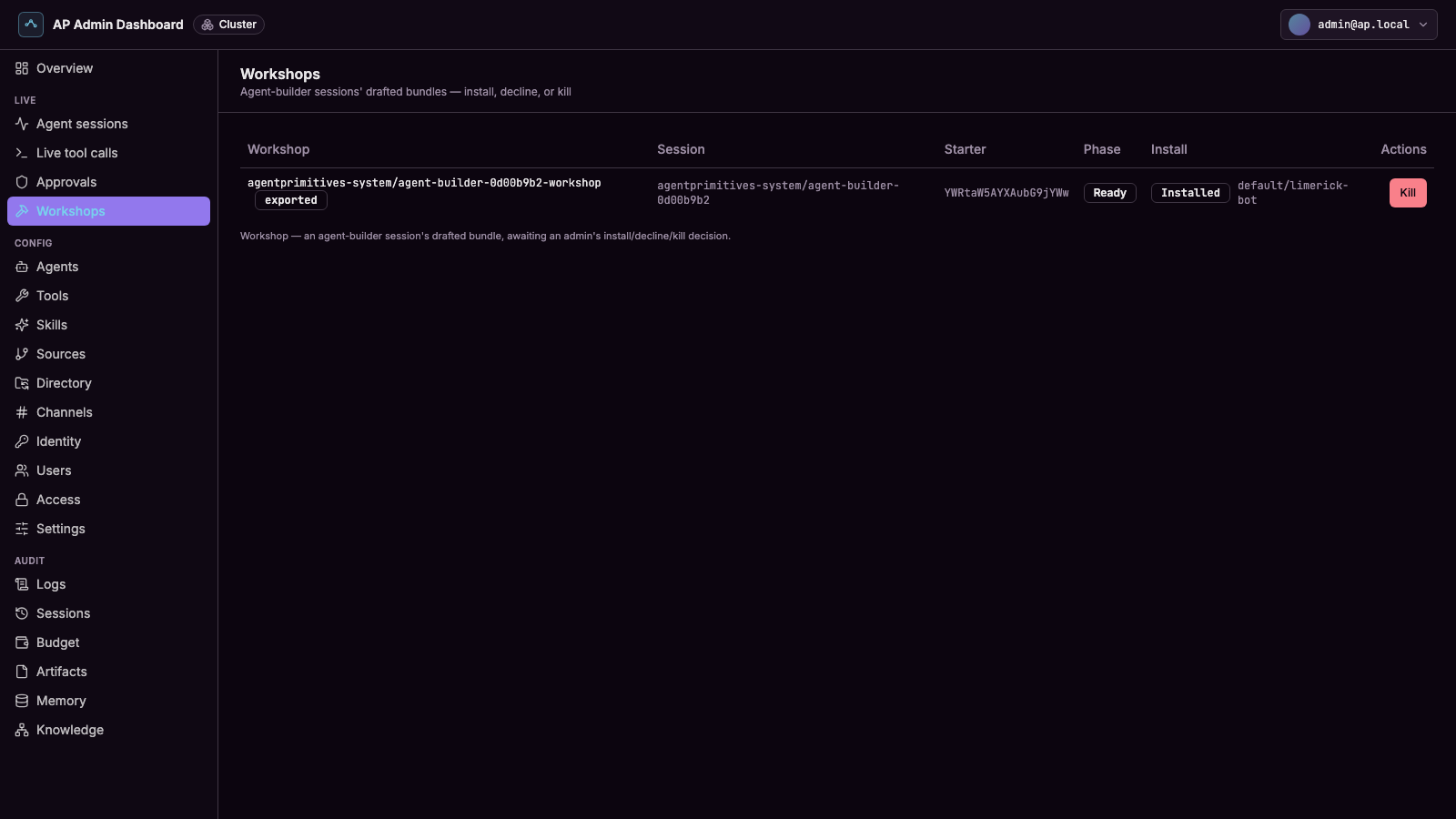
The admin sees the request under Workshops in the admin console alongside the other open workshops: who started the build, what phase it is in, and the state of the request.
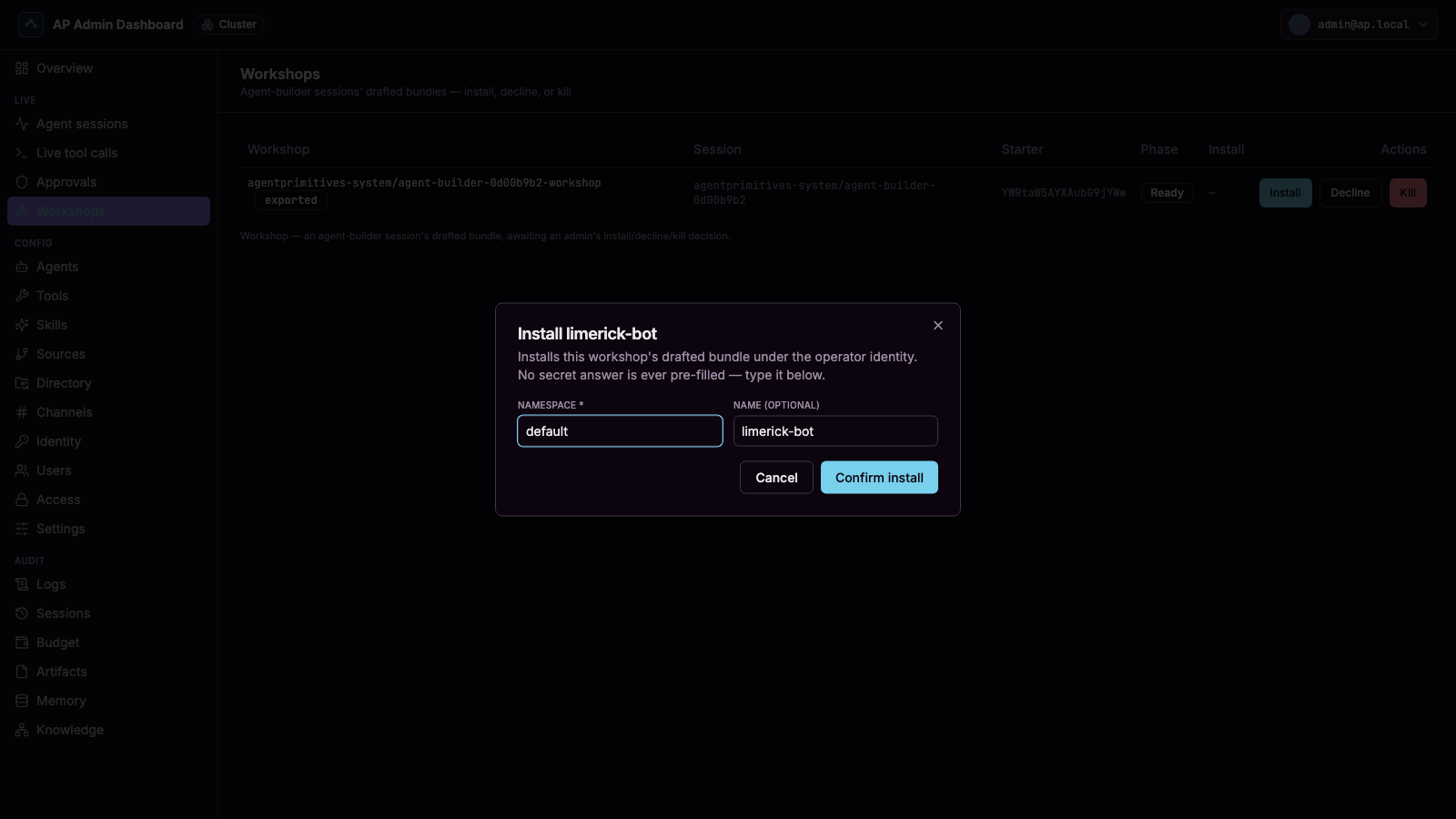
Install asks for the namespace the agent should land in — plus any install-time questions the draft
declares, the same ones oap agent install would ask — and applies the draft there:
Decline ends the request instead. Either way the person who asked is told, and either way the saved draft stays theirs. Once installed, the row records where the agent landed:
After a decision
An installed agent lives in its target namespace like any other; the workshop that built it is released. A declined request ends the same way — the workshop is released once the session ends and the request has a decision, and the draft is still on the page and in the conversation for as long as the session's records are kept. See Workshops and limits for what "released" means and when it happens.