Delivery & completion
An agent can render a perfect report and still leave you empty-handed if it never hands it over. So OAP draws a line between producing an artifact and delivering it — and can hold a session accountable for the difference.
Produce, then deliver
Producing an artifact creates the durable, versioned output. Delivering it is a separate act: the agent attaches the artifact to its reply, which is what actually puts it in front of you. A render that's ready but never attached is work the agent did that you never received — which is exactly the gap this distinction exists to close.
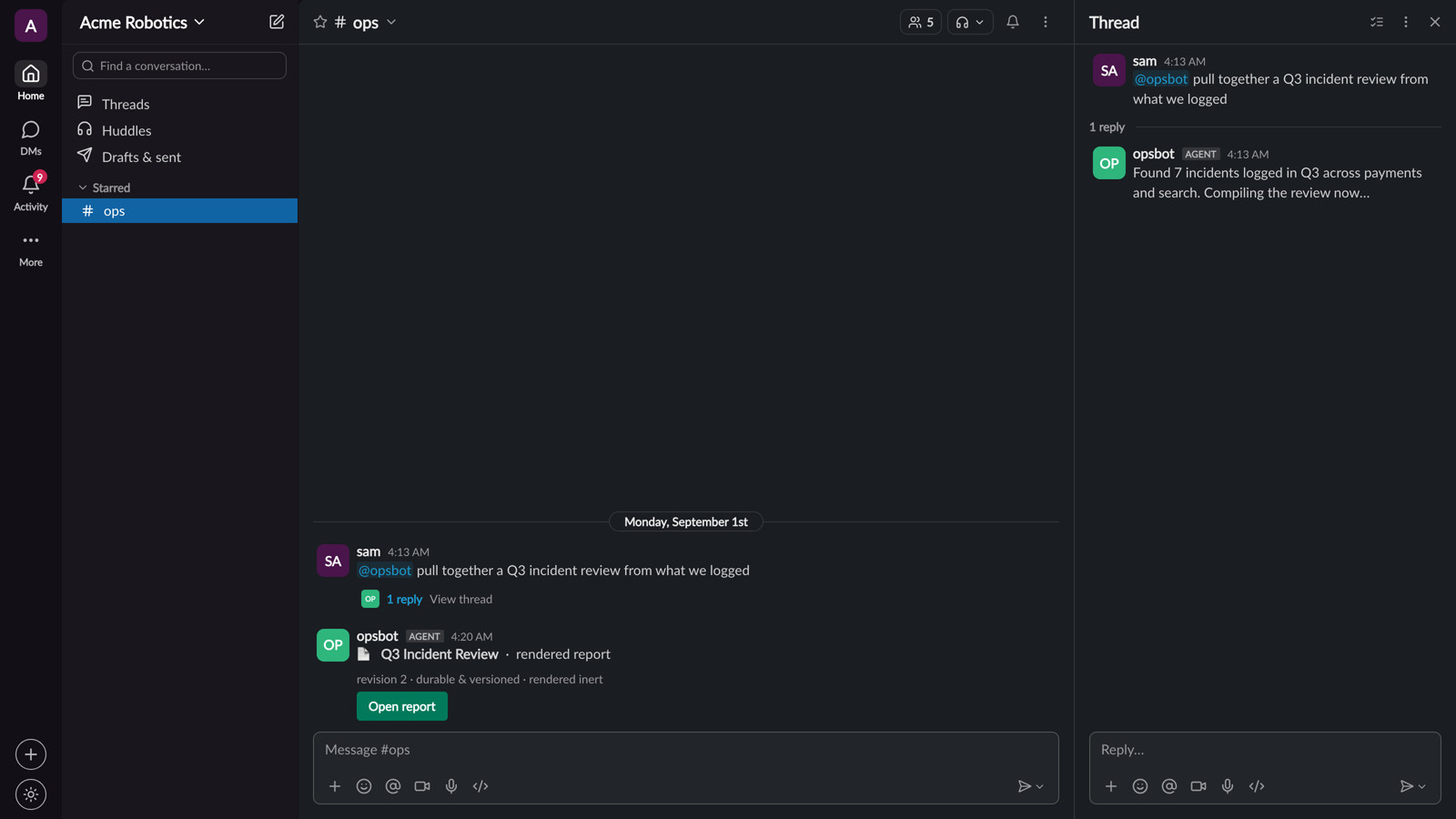
The delivery completion requirement
An AgentClass can declare that delivery is required. With it, a session cannot complete while it owns a rendered artifact that was never attached to a reply — the agent can't quietly wrap up having produced something it didn't deliver. Like every gate in OAP it fails closed: if the runner can't confirm delivery, it treats the requirement as unmet rather than assuming the best. (A session with no reply channel at all is the one exemption — there's nowhere to deliver to.)
Offering a live view
Alongside attaching the rendered bytes, an agent can offer a live view — a button that opens the artifact in the browser. The button carries no frozen link: a fresh, short-lived signed URL is minted on each click, so it keeps working for the life of the session instead of expiring thirty minutes after it was posted. An offer, though, isn't a delivery — it points at the artifact rather than handing over the bytes, so it doesn't satisfy the requirement above.